
Top Sensory Tools for Child Focus and Regulation
Parenting, Sensory Tools, Child Development
What Are the Best Sensory Tools for Children Who Struggle to Sit, Focus, or Stay Regulated?
There is no single best sensory tool for every child. The most useful tool is one matched to the child's specific need, used safely, and shown to improve a meaningful activity such as completing homework, participating in class, tolerating a noisy environment, or sitting through a family meal.
Key Takeaways for Buying Sensory Tools
When children struggle to sit, focus, or stay regulated, it is tempting to search for the “best” sensory product and hope it solves the problem. In practice, the most effective tools are chosen according to function rather than popularity. A trendy item that does not change your child’s daily activities is not a good investment, no matter how often it appears on recommendation lists or social media.
Choose sensory tools according to function rather than popularity or marketing claims.
Fidgets do not automatically improve attention and may become distractions.
Movement tools can support some children and distract others, depending on how they are used.
Noise-reduction tools may be helpful in the right environments but are not suitable everywhere.
Expensive sensory equipment is not automatically more effective than simple or low-cost options.
Which Sensory Tool Should I Buy?
Before purchasing anything, finish this sentence:
"I want this tool to help my child ______."
Sit through dinner.
Complete homework.
Tolerate a loud environment.
Stop chewing clothing.
Transition after school.
That changes the conversation. Instead of asking, “What is the best sensory toy?” you are asking, “What might help my child sit through dinner without leaving the table every two minutes?” This functional focus helps you avoid collecting products that do not address the real difficulty. If you are not sure what type of sensory need you are trying to address, Sensory Processing Disorder in children explains sensory seeking, sensory sensitivity, vestibular processing, proprioception, and the other systems that may influence your child's behavior.
How Do Common Sensory Tools Compare?
Below is an overview of several commonly used sensory tools, the possible purpose of each, and key safety or practicality considerations. These are not prescriptions. They are examples of why the purpose comes before the product, especially when you are comparing and buying tools for home, school, or therapy settings.
Tool Possible purpose What to watch for Chair resistance band Leg movement during seated activities Becoming a toy or distraction Wiggle cushion Allows some movement while seated Excessive movement or reduced stability Hand fidget Tactile input during appropriate tasks Visual or cognitive distraction Noise-reducing headphones Reduces environmental sound Communication, safety, and overuse considerations Appropriate chewable tool Alternative source of oral input Hygiene, wear, correct product and supervision Therapy ball Movement or gross-motor activity Falls and appropriate supervision Heavy-work activities Proprioceptive input Appropriate intensity and activity selection
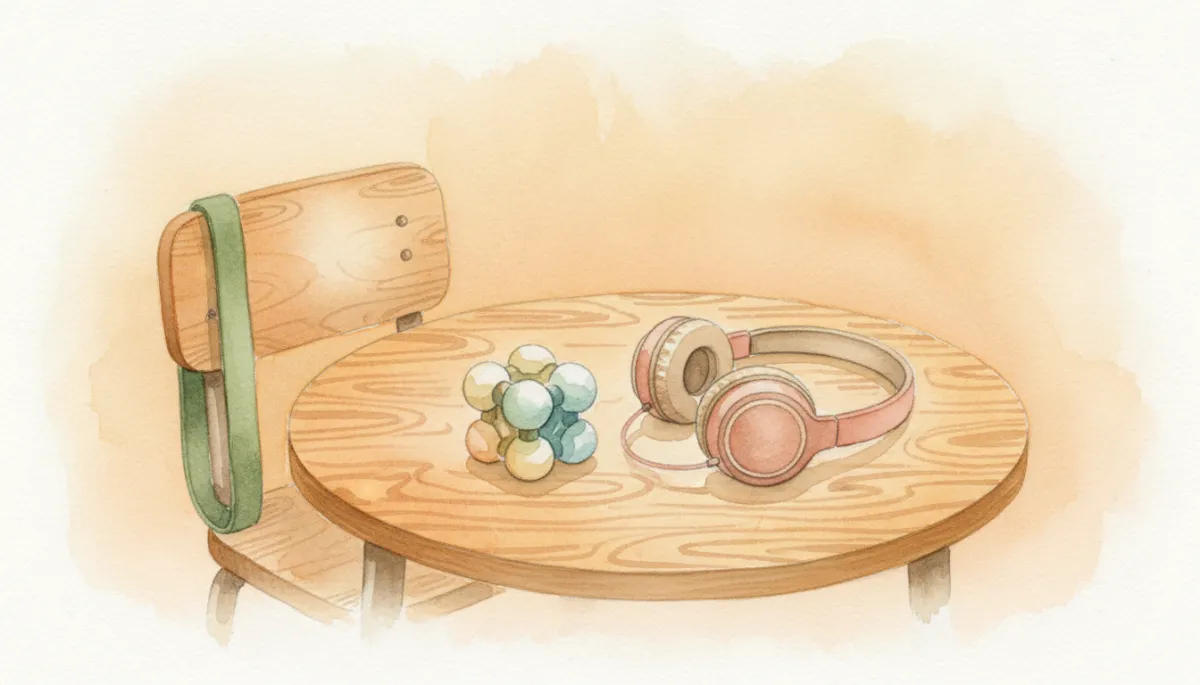
Comparing tools by purpose and impact helps families buy more intentionally.
Are Expensive Sensory Products Better?
Not necessarily. The current market includes everything from small individual tools under $20 to full sensory rooms that can cost tens of thousands of dollars. For example, individual items such as noise-reducing headphones or chewable tools may be available for under $50, while larger pieces of equipment and multi-sensory setups can range from several hundred dollars to more than $20,000 for institutional rooms and interactive systems. Despite this range, price does not guarantee effectiveness for your child’s specific needs.
Many useful movement and regulation opportunities require little or no specialized equipment. Depending on the child, possibilities might include playground activities, outdoor play, climbing, carrying age-appropriate objects, movement breaks, changing the workspace, or modifying routines. Before building an expensive home sensory setup, What can I use instead of a traditional sensory diet for my child? explains why ordinary routines and environmental changes can sometimes be a better starting point than high-cost products.
Are Fidgets Good for Focus?
Sometimes. Fidgets are widely marketed as attention tools, especially for children with ADHD or sensory processing needs. However, fidgets do not automatically improve attention. If a child uses a fidget but pays more attention to the fidget than the teacher, the tool is not accomplishing its intended job. In that case, it functions more as a toy than a support.
“Using a fidget” is not the outcome. The outcome is the activity you care about, such as listening to instructions, completing written work, or participating in a discussion. When evaluating a fidget, look for measurable improvement in the activity you are targeting, not just whether the child is holding or manipulating the object.
How Do I Know If a Sensory Tool Works?
To judge whether a tool is effective, measure the change in the real-world task, not just the use of the product. If your goal is homework, do not measure:
“My child used the wiggle cushion for 20 minutes.”
Measure:
“My child completed 15 minutes of homework with one reminder instead of getting out of the chair seven times.”
That is a functional outcome. It is also how sensory tools are considered at Kerrie Rowe OT. Rather than recommending something simply because it is marketed for sensory processing, the focus is on what specific activity we want the tool to improve and whether it is actually accomplishing that goal over time.
Should I Buy Sensory Tools Before Seeing an OT?
You do not necessarily need to purchase tools before consulting an occupational therapist. When difficulties are significant, understanding the problem before buying equipment may save money and lead to a more targeted, effective plan. An OT can help you clarify which sensory systems are involved, what functional changes you are seeking, and which strategies—tools, routines, or environmental changes—are most likely to help.
If you're unsure whether your child's challenges warrant assessment, Does my child need an occupational therapy evaluation for sensory issues? explains the functional signs to look for, such as persistent difficulty with daily routines, participation in school, or coping with typical sensory environments.
Frequently Asked Questions
What Is the Best Sensory Toy for a Child With ADHD?
There is not one universally best sensory toy for children with ADHD. Some children benefit from quiet hand fidgets, others from movement breaks, and others from environmental changes such as reduced noise or visual clutter. Choose tools based on the child's specific functional need—for example, staying seated for a short lesson—rather than diagnosis alone.
Do Fidget Toys Actually Help Children Focus?
They may help some children, but they can distract others. The key is whether there is a measurable improvement in the activity you are targeting, such as listening, reading, or writing. If focus worsens or the fidget becomes the main focus of attention, it is not the right tool for that situation.
Are Wiggle Seats Good for Kids?
Wiggle cushions or seats can provide movement while seated for some children, which may help them remain at the table or desk. However, they are not appropriate or helpful for every child. If the cushion leads to constant bouncing, sliding, or tipping, or reduces stability for writing, it may be counterproductive and should be reconsidered or used differently.
Do I Need to Buy Sensory Equipment Before Seeing an OT?
No. In many cases, it is more effective to seek an evaluation first. An occupational therapist can help you prioritize goals, identify which tools (if any) are likely to help, and suggest low-cost or routine-based strategies. This approach can prevent unnecessary purchases and ensure that any tools you do buy are clearly linked to the outcomes you want for your child.